

S1 Ep1:
Test MOAT Podcast Episode with Pol
The Mindset That Scales Your Business
SEO Heading Goes Here Before Description
Lorem Ipsum is simply dummy text of the printing and typesetting industry. Lorem Ipsum has been the industry’s standard dummy text ever since the 1500s, when an unknown printer took a galley of type and scrambled it to make a type specimen book.
It has survived not only five centuries, but also the leap into electronic typesetting, remaining essentially unchanged. It was popularised in the 1960s with the release of Letraset sheets containing Lorem Ipsum passages, and more recently with desktop publishing software like Aldus PageMaker including versions of Lorem Ipsum.
It is a long established fact that a reader will be distracted by the readable content of a page when looking at its layout. The point of using Lorem Ipsum is that it has a more-or-less normal distribution of letters, as opposed to using ‘Content here, content here’, making it look like readable English. Many desktop publishing packages and web page editors now use Lorem Ipsum as their default model text, and a search for ‘lorem ipsum’ will uncover many web sites still in their infancy. Various versions have evolved over the years, sometimes by accident, sometimes on purpose (injected humour and the like).
You’ll Learn
- Lorem Ipsum is simply dummy text of the printing
- Simply dummy text of the printing and typesetting industry
- Lorem Ipsum is simply dummy text of the printing
- Simply dummy text of the printing and typesetting industry
Also Listen On


Transcript
Click to read the transcript
Igniting Inner Fire: Soul Fire Sisters Season 1 Wrap-up & Future Glimpse
Hi, I’m Doctor Mary Newstrom.
Speaker 2
And I’m Dawn Morningstar, welcome to Soul Fire Sisters, a sacred space where we ignite women’s inner fire, awaken their truth, and share soulful conversations that inspire, heal, and empower.
Speaker 1
Each episode we dive deep into themes of self discovery, intuition, feminine wisdom, and spiritual growth, guided by raw stories, fierce honesty, and a shared desire to live boldly and authentically.
Speaker 2
Whether you’re on a healing journey, seeking deeper connection, or ready to rise in your power, you are not alone.
Speaker 1
Dawn Morningstar, which is her given name, has been a Women’s Self Empowerment Coach for 37 years, is the award-winning author of Venerable Women Transform Ourself, Transform the World is a former radio talk show host, a podcast host, Ted X speaker, the creator of Radiant Face 18 and.
Speaker 2
Co.
Speaker 1
Founder of New World Women.
Speaker 2
Doctor Mary Newstrom is an internationally known shamanic teacher, a spiritual minister, and a keynote speaker.
She founded Zenith High LLC and created Spirit Flower, a shamanic study program for women.
She’s committed to helping women and men develop a strong sense of purpose as they examine and understand how to stand clearly in their power.
Speaker 1
Welcome to the sisterhood, Your soul showed up for a reason.
Speaker 2
Hey soul fire sisters season 1 of soul fire sisters has come to an end. 12 powerful, honest, soul igniting conversations, and Mary and I are filled with deep gratitude.
Thank you.
Thank you so much for listening.
Thank you for sharing the episodes.
Thank you for writing to us and telling us how these conversations stirred something inside of you.
We felt you rising with us, and now we are entering a sacred pause.
Soul Fire Sisters will be on a short break while we create Season 2 for you, and what is coming next feels even deeper, bolder, and more aligned than before.
Doctor Mary Newstrom and I are so excited.
What we’re building for you is intentional, it’s potent, it’s rooted in truth, and it’s infused with fire.
There’s something else we want to share, something personal.
Both Mary and I were raised Catholic.
We were taught certain stories about women, and we were handed interpretations.
We were told who Mary Magdalene was.
We were told she was a prostitute.
That narrative shaped generations of women, consciously and unconsciously.
And now, Now we are discovering something radically different.
We are beginning to hear Mary Magdalene’s philosophy as an empowered woman, a spiritual initiate, a teacher, a leader, a woman whose voice was never meant to be silenced.
And that changes everything.
Unveiling Truth: Exploring Mary Magdalene’s Legacy & Personal Journeys
In this spirit of reclamation, I am leading a book inspired circle based on the book Mary Magdalene revealed by Megan Watterson.
Think of it as a sacred space to explore her teachings and what they mean for us as modern women, ready to remember our authority, our devotion, our divine intelligence.
This is not just historical correction.
It is spiritual restoration.
It is feminine resurrection.
It is remembering who we have always been.
Season 2 of Soul Fire Sisters will continue this journey.
The unraveling, the awakening, the rising.
Stay with us during this sacred.
In between there is power in the pause.
And so for this bonus episode, you can have a sneak peek into our book inspired Circle based on Megan Watterson’s book Mary Magdalene Revealed.
Enjoy, feel a new truth emerge and join new world women so that you can remain on this journey with us for the six sessions that are coming up.
Please join us and please continue listening to Soul Fire Sisters.
I feel, what’s the word in Yiddish verklempt where you feel like you just have all this emotion inside of you.
You just feel so filled, and that’s how I feel about this.
I had listened to Mary Magdalene Revealed several months ago and just felt such a connection with with her teaching and really felt that if her gospel had been put out there, how everything would be different.
Everything would be different.
And I also thought back to all of the research I did on Mary Magdalene when I wrote my book back in 2016.
And what how Margaret Starbird, for example, she wrote The Woman with the Alabaster Jar.
And she set out to prove that Mary Magdalene was not a, you know, a high spiritual leader and a wife of Jesus.
And she ended up at the end of all of this, having the exact opposite conclusion that Mary was Mary Magdalene was a high priestess of sorts or a high spiritual teacher.
So anyway, I’m very, very happy that we’re all doing this together.
And when I look out and see your faces and feel your energy, my faith in humanity is restored.
I know that you, we have come here with our hearts open and our minds clear and our path forward is unified.
I know that because I know pretty much everyone on this call, some more than others, But I do know that our hearts is what brought us here tonight.
So I want to begin, as I will each week, by expressing gratitude to Megan Watterson for her scholarship, for her courage in writing this book, and her devotion to restoring restoring Mary Magdalene to her rightful place in spiritual history.
Plus, I really loved hearing Megan’s personal stories.
They were like exclamation points to me along the way.
And I really loved how she helped us to, you know, to understand Mary Magdalene, who really is our spiritual foremother.
She is our spiritual foremother.
Spiritual Restoration: Mary Magdalene’s Truth and Inner Authority Meditation
So this is not just a book about Mary Magdalene.
I know at least one person on here was not raised with any kind of Christian background or religious background.
And so it doesn’t matter, though, because everything has been somehow influenced by Christianity as it’s been spoon fed to us or shoved down our throats.
Excuse me?
No editorializing here, Don.
This is a book about truth.
It’s about distortion.
It’s about reclaiming what has been silenced.
And ultimately, it’s about us.
Dylan was diminished.
She was meet those distortions, though, is a woman of immense spiritual authority.
She was an apostle.
She was a teacher, a beloved companion and consciousness.
And I, I don’t know about you all, but I was raised, I was told that she was a prostitute.
And so anyway, I’m really glad that we are setting the record straight and when we restore Mary Magdalene, something in US gets restored.
This circle is about feminine remembrance, reclamation, and rising.
So over these seven weeks, I affirm that we will gently peel away some inherited narratives that we’ve had and allow ourselves to feel what resonates is truth to us because it will continue to keep awakening us and awakening us.
Peeling back the lairs.
So tonight we’re going to begin with the introduction of Chapter 1 and with the invitation to remember who Mary Magdalene really was and who we are in the process.
So I thought we would start off with a meditation this time.
I know we’ve kind of, and when we were doing the Golden Future, we kind of moved it around, but I really felt that starting off with the meditation would be a lovely thing to do.
So if you are comfortable, you can close your eyes or have a soft gaze, unfocused.
Take a slow breath in and then exhale again, breathing in and breathing out.
With each breath, feel your body soften.
Now imagine that time is not a straight line, but a circle.
Imagine yourself stepping back beyond the room that you’re in, beyond this century, beyond what you have been told is possible.
See the landscape of ancient Galilee, the warmth of the air, the dust beneath your feet, the hum of life in a small village.
And somewhere in this landscape there is a woman, strong, steady, clear.
She is not bowed, she is not ashamed, she is not hidden.
She carries within her an unshakable, knowing feel her presence not as a distant historical figure, but as a living frequency.
Notice her strength, her intimacy with truth, her courage to stand in spiritual authority even when she is misunderstood.
Now imagine that she turns toward you, and as she looks at you, you recognize something.
You recognize yourself.
Her strength lives in you.
Her clarity lives in you.
Her sacred partnership with the Divine lives in you.
And gently, silently repeat.
I reclaim my inner authority.
You can say this quietly to yourself.
I reclaim my spiritual voice.
I reclaim the sacred feminine within me.
Feel those words ripple across time, forward into this moment, and now see yourself returning to the space that you’re in to this year, carrying that strength and clarity with you.
Take one more breath and when you’re ready, gently open your eyes.
Let’s begin with what moved you the most in this book.
What Stirred Us Most: Initial Reflections on Mary Magdalene Revealed
I really want to start by asking what surprised you or stirred you most in the introduction or Chapter 1.
And by the way, if you haven’t had a chance to read either of those, just come along for the ride and you’ll be able to catch up.
I’m sure you will.
So you can, if you’re ready to respond, you can just unmute yourself and share what surprised or stirred you in the introduction or in Chapter 1.
Go ahead, Mari.
Oh, Sean, do you want to be able to help with this?
Because I can’t see everybody.
Speaker 1
Yeah, I sure can.
Let’s see.
So I think it was Lisa.
OK, I’m happy to go.
I, you know, Megan Watterson is a well respected theologian and theological scholar.
And, you know, this book comes highly recommended because of the work that she did not just with the text, but also to taking herself to these, you know, sites and places and really, you know, going there to look for what was there and contextualizing it.
What I really appreciated was the vulnerability of incorporating her own journey alongside of the scholarly kind of research.
And that that it it, it brings me in in a very different way.
So I really appreciated that.
Speaker 2
I love that.
And do you have personal experience with that yourself because of your journey that is similar to hers?
Speaker 1
Well, it’s, it’s, you know, my first book.
I, when I sent it to the, the beta reader, you know, she came back and said, stop shaking your finger at me, which was amazing advice.
I had to make it, you know, I had to be vulnerable.
I couldn’t be the authority and just say, this is what you need.
I had to actually be vulnerable.
And, and it, it improved my writing and my, my capacity and I, And so when I see that in other academic work, I just, I really appreciate it because it’s, it’s a hard thing because it’s academic writing is not like that.
Speaker 2
Yes, exactly.
Thank you, Lisa.
Thank you, Mari.
I believe you were next.
If you’d like to unmute yourself, you can go ahead and share anything you’d like.
And I do have some actual questions as well, but please share your initial feelings about this.
Speaker 1
Well, I was raised by a mother who was on her way to being a nun in the Catholic tradition in the, you know, early 1960s.
And so, and I knew at it when I was in second grade, when the nuns in the school I went to told me I was born in sin, that she was lying.
And I, I mean, in my second grade mind, it was like, you’re not telling the truth.
I was not born in sin.
Like, that is not true.
And for some reason my mother was like, what, you know, there’s some controversy about that, but you’re in second grade and you don’t have to go to religion class anymore.
And I, so I grew up with this kind of pervasive Catholicism that I really struggled with and the surprise and I, I basically left Catholicism when I was 16 and, you know, full on went into witchcraft and tarot cards.
I moved to California, you know, I all the things.
And I just thought Mary Magdalene wasn’t real and that they had done such a good job in the 4th century, the Bible and so forth, that I was convinced that she was a myth.
And because of the impact of the 5th dimension book, the one that you read last time I, I read that and I was like, whoa, OK, I guess I have to join New World women and I have to read this book.
And I, I’ve listened to the whole thing and I’m like, so the people who were lying were not, was not Mary Magdalene.
So it was like, oh, oh, this is the part I do believe.
And so it was just incredibly affirming and the sort of authority that she and conviction that she writes from.
And it’s a, it’s the, it’s that feminine authority.
It’s, it’s not patriarchy authority.
So I, I, I’m just amazed and I’m so glad to be here.
Speaker 2
We’re glad you’re here too.
Thank you.
Thank you.
And I see Deb Halverson, you have your hand up.
You’re next.
Speaker 1
I do.
I’m so glad everybody’s here.
What a great book for us to discuss.
Oh my gosh, So what Really what what I have highlighted here and if I could, I just want to read it out loud.
It’s on Roman numeral page 15.
From the From a theological perspective, Mary Magdalene’s Gospel is considered an ascent narrative, which means that it describes a path that we can navigate to liberate the soul not in death, but here in this lifetime.
Ascension according to the Gospel of Mary is more accurately A descent into the heart.
So further up is actually further in.
Oh my gosh, I love that.
Absolutely love that.
Oh, OK, that’s all I had to say.
Speaker 2
Lisa said she underlined that as well, and so did I.
Yeah.
And the eye of the heart, I mean, she that that phrase is used quite a bit, which I think is just.
It says it all, really.
Thank you.
Thank you.
OK, so Laura, you’ve got your hand up.
You want to unmute yourself?
Hi, Laura.
Speaker 1
And I recognize Jeff as well.
So glad to be here.
Thank you so much.
I’m excited.
I’m, I’m excited to hear from all these wonderful people as well.
The thing that surprised me most, you asked this question like what was surprising about the introduction was that the seven powers in Mary’s Gospels serve as the template of what it means to be human.
That makes sense to me.
But I was so surprised at the Southern powers being, you know, kind of Downers human flaws.
I was just surprised that it was phrased that way.
Speaker 2
Yeah, I was.
I was surprised by that, too.
Yeah.
And you know, in the Bible, it’s like the seven demons were driven out of Mary Magdalene.
And so I think the way it it’s described in the book is that these are things that these are human things that she overcame and she learned that from studying or being with with Jesus.
Anybody else have a surprising one?
I have a surprising 1.
I want to share when the time is right.
Sharon, did you motion that you wanted to?
Yeah, go ahead, Sharon.
Speaker 1
I was going to say that I love the same, I underlined the same, the same two things with the ascent gospel because it seemed the figuring out those different, the working through those human things is what creates it as an ascent gospel.
And the other thing, just to mention, if anybody’s interested, I’ve heard a podcast today with a lady with a woman who was referenced, Elizabeth Schrader, and she has been studying the digitized text of Papyrus 66, which is one of the one of the, I think it’s one of the Dead Sea Scrolls, but it’s recently been digitized.
And she is a, she’s a professor at Villanova, which is a Catholic University.
And she has been uncovering and I don’t know a lot about this because I haven’t delved into it, but but but uncovering the manipulations in the text of John Chapter 11 and is realizing that Mary as this gospel that dates to the, you know, 2 hundreds.
So it’s, it’s a very, very early version of John, that it’s just Mary at Lazarus’s resurrection and it was Martha was added and that having two women there gives it a completely different read.
It’s a Christological confession.
And Peter and the other gospels is who that is attributed to.
And Mary is who gets that attribution.
Possibly.
If this is, then I mean, it’s anyway, there’s, there’s so much out there and I’m just so grateful that these things are starting to come to light, that there is a path to move past our egoic selves and actually move into a more perfect relationship with God.
So that’s what that’s my thing.
Speaker 2
I love that if you have the name of the podcast and you’d be willing to type it in to chat to everyone, that would be kind of cool.
Yeah.
Thank you.
Thank you.
Yeah.
What is hidden is being revealed or what has been hidden is being revealed across the board, Right, So here’s the one that got me was then Peter said to him, this is on page 15.
You have been explaining every topic to us.
Tell us one other thing.
What is the sin of the world and the Savior replied, there is no such thing as sin.
There is no such thing as sin.
So imagine how the world would be different if we were, you know, really understanding that we are, you know, we can make mistakes for sure.
We can miss the mark, which is the original Greek, I believe meaning of the word sin is missing the mark.
It was an archery term.
You missed the mark.
So.
So anyway, that made me feel really happy because sin has been held over us.
We were told we were born with sin.
My God.
Anyway, all right, so moving on.
If no one else has a comment, I have a couple of questions that we can discuss.
From Prostitute to Apostle: Reconsidering Mary Magdalene’s True Role
So how did it feel to you to read that Mary Magdalene was considered an apostle and even the apostle to the apostles?
And what shifts inside of you when you consider that possibility going from being prostitute to being an apostle to the apostles And many and some of the gospels, I don’t remember which one, but I think it was two of them where they’re saying about Mary that Jesus loved you best.
Like they’re jealous, right?
And so I thought that was kind of interesting because clearly it seems based on what we’re reading, that that Jesus taught Mary and she was a very fine student.
So.
So anybody want to comment about knowing that Mary finding out that Mary was considered an apostle?
Or did you all already know that?
No, Marcella, you want to go ahead?
I see.
Were you saying something you can unmute?
Maybe I caught you off guard.
Oh, there you go.
There it is.
Speaker 1
I was saying yes, yes, we knew when did I was trying to date it over the last week of when did we learn about Mary Magdalena?
When you know, what was that the 90s?
I can’t remember.
And all these Mary Magdalena books started coming out and I’ve, I’ve tried to put that into context in my, in my life and the things I went through in the, in the 80s, I found Kuan Yin.
And so that was, you know, a huge thing for me because up until that point, I’d only had mother Mary was my own.
I, I didn’t know there was anything beyond that.
And I, I grew up Protestant, so I always had this big longing firm for Mother Mary.
I, you know, I’m, I wanted and needed a loving mother.
So as a Protestant girl going to public school, I could see that beautiful statue of Mother Mary across the street at the Catholics grade school.
And I, I was so jealous.
I was just like, you know, where I, I didn’t have any language or understanding for that, but I knew I had an ache for the sacred feminine and I’m, and I knew that’s where I would find the mother that that I needed.
And so then it was which was the 70s when I really developed a relationship with Mother Mary.
But then the 80s was when I had a visitation by Kuan Yin, and then she became, you know it for me.
And it seems like it was in the 90s when we learned about Mary Magdalena, when all those books started coming out.
I mean, I suppose it’s different for everybody, but it seems like that thought moved into the collective in the 1990s.
Speaker 2
I think so so.
Speaker 1
Yes, we, we knew.
We knew we’d been lied to all the time.
And it was, you know, it was around, it was in the 6th century when Pope Gregory gave his sermon and conflated her with other figures in the New Testament who were not her but were prostitutes or whatever.
And he, as we say today, muddied, he muddied the waters.
And so she, she was actually very well known at that time.
People knew who she was and what her role was in the history, but people didn’t dare to speak up against the Roman Catholic Church because they didn’t take that very well.
Speaker 2
That’s right.
That’s right.
Speaker 1
You put your life in danger.
Absolutely.
Speaker 2
Thank you so much, Marcella.
You’ve really brought a lot of things for us to think about, and one of them is when you’re saying Mary Magdalena, are you saying is that Mary Magdalen?
Do you mean the same person?
Speaker 1
It is.
There’s different pronunciations and references to her name, Mario Magdala.
And I’m I’ve been using the Magdalena pronunciation, which I consciously decided months ago because I’m doing a project where I’ll be presenting and speaking her name many times.
And so I chose that pronunciation.
So I’m embedding that into my subconscious mind.
I love that and I need to stay with that.
Or I could be confused then when I’m on stage later and I’m going to say Magdalena.
Speaker 2
Yes, well, the interesting thing about Magdalena is it ends in an A, and that’s feminine, so that’s kind of nice.
You’re saying the 90s?
I remember in the 1970s going to see Godspell and Mary Magdalene, the song.
I don’t know how to love him.
I remember people talking more about Mary Magdalene during that time and so, but I think it’s been, it’s obviously been a process.
So anyway, anyone else have any comments about your feelings around finding out or knowing that?
Well, actually, let’s let’s shift it because I think if you wanted to talk about that, you probably would have raised your hand.
What shifts inside of you when you find that out that she had that role rather than the role that we have been told that she had?
What shifts inside of you?
Speaker 1
Hi, it’s Laura.
I’m not, you know, I’ve been looking for the little hand here in the Zoom and I cannot find it anywhere.
So if somebody has a clue for me, I would really appreciate it.
It’s under the React.
You have to go under react.
Oh, I always thought I was going to be putting hearts all over the screen.
OK, thank you so much.
I really appreciate that.
So maybe this, my thoughts about this relate to both your first and second question.
I come from a Jewish background, so I don’t, I have not studied the apostles, but I’ve, I’ve been a student, of course, in miracles.
So Jesus has been a big part of my spiritual practice and I’ve always felt in that study, because it’s a very male language way of phrasing the teaching, it just feels sometimes like I have to do mental gymnastics to relate to it.
And so when I found out about her being the first apostle, there was a sense of like just relief in my body and, and a sense of being validated.
Those two things is how I really felt when I’m, I started.
I’m I’ve been listening to the book, but now I have a copy of it.
So I have a book copy, but those are my physical feelings.
Speaker 2
I love that.
A sense of relief.
Yeah, yeah.
And and Carl Jung.
And it sounds like what Marcella was saying to the sense of the mother, right?
The sense of the feminine, I should say.
And Carl Jung said that without the mother, the church dies.
And so that’s something that I have always struggled with, is like being raised Catholic, everything is male.
Anything that has to do with power is male.
And I have always said that I would not even take a second look at the Catholic Church until they start allowing women to not just be priests and bishops, but to become Pope.
That’s the day that I’ll know that they get it.
But in the meantime, it is the most patriarchal, I’m, I shouldn’t say the most.
I don’t want to qualify it in that way.
It is completely patriarchal.
And so that’s not anything I would want to be a part of.
And so, and The thing is, it’s not just about what are what I’d like to be a part of or not, It’s also how it impacts the world.
That’s what I keep thinking about.
It keeps that patriarchy locked in.
You know, I know that’s breaking apart, but that has been the way it’s been for a very long time.
So I have another.
I’ll go ahead.
Go ahead, Cat.
Speaker 1
So I was introduced to Mary Magdalene when I lived in California in the late 90s, and I became a part of the church out there dedicated to Mary Magdalene and what it did for me, it started my healing.
Speaker 2
Process.
Speaker 1
And my remembrance of my divinity.
I’m going to cry.
And I still am dedicated to her.
She’s on my altar.
And one of the most powerful things was to heal my relationship with the masculine.
And I was in such resistance of that, such resistance.
And she said, but I asked, I’m asking you to This is what we need now.
And Oh my God, it was so hard, but so profoundly beautiful.
And then I started having these beautiful experiences with these men in ritual space.
And they’re kneeling on the ground.
They’re.
Speaker 2
Looking at me, you know you’re like, what’s going?
Speaker 1
On but they’re seeing something different as as she started rising in me, as I started remembering aspects of myself.
So I just love this woman.
She’s deep in my heart and in my blood as I believe she is for in our blood.
She’s part of our bloodline in my opinion.
So thank you, Mary Magdalene.
Thanks for letting me speak.
Speaker 2
Thank you, Kat.
That was very beautiful.
Thank you for that vulnerability and sharing and it feels really inspiring to me.
And it’s true.
She is in our bloodline.
She is in our bloodline.
So Gloria, I see you have your hand up, dear.
Go ahead.
Speaker 1
Well, certainly I too have been raised in the Catholic Church and left it probably in my 20s.
And I think, I think the Catholic hierarchy has obviously put us down, women down, have not seen our value as as apostles, as disciples.
And I think we have to find a way now to walk beside the men at the church rather than behind, raise ourselves up not to to be more powerful, but to be as powerful as men.
Yes.
Speaker 2
Aho sister, I was going to say Amen, but a lot of people don’t like it.
It has the word men in it so.
Speaker 1
OK, I one more, one more last thing.
I mean, you know, Mary, I don’t even have that reputation of being a prostitute, but according to the Bible, the genealogy of Jesus there was the first person was a was a prostitute.
Speaker 2
Say that again.
Speaker 1
In the genealogy of Jesus, Yeah, As in the Bible, one of the first people in his genealogy was a prostitute.
Oh.
Speaker 2
There we go.
Thank you.
I did not know that.
I did not know that.
All right.
Any other comments about that before we move into our next question, which is about distortion and erasure.
OK.
So what emotions arise for you when you reflect on how her story was altered or diminished?
Echoes of Erasure: Mary Magdalene’s Story and Modern Women’s Voices
And I think we’ve kind of gone down that path a little bit, but the follow up to that is where do you see parallels in the silencing of women today?
Speaker 1
I can comment on that, Don.
The silencing of women today, I mean that one, one of the areas that I look at and pay attention and focus on more than anything in my life is sexual assault survivors.
And so the silencing of women has sexual assault survivors has been going on for centuries and centuries and centuries and actually still, still going on.
And yeah, but I’m hoping, I’m hoping with.
Speaker 2
So.
Speaker 1
Much that I feel in the air and that is happening, that we’re going to come out of this with perhaps a new understanding of who is the oh, I just got to say it, Who is the asshole and who’s not right?
I’m sorry, I just had to say it.
Speaker 2
Yeah, that’s the word.
Speaker 1
And and so, so that’s that’s my answer to your question.
Thank you.
Speaker 2
You’re very welcome.
Yeah.
And I mean, the silencing of women today, it’s there’s so many ways that this regime really wants to silence women.
It started with, you know, Roe, Roe V Wade being overturned.
And there’s talk of, you know, even contraception being banned or changed in ways that would make it harder or impossible to get.
So these are ways that women lose agency over their own bodies.
And so that’s a way of silencing your voice and who you are in the world.
And so it’s just from so many different directions.
Even thinking about voting, there is talk now about voting where you’d have to use your passport or some ID.
But I think if you use your passport, it would have to be your given name when you were born.
So if you were married and you have a different name, then you wouldn’t be able to vote.
So it’s like all kinds of insidious ways.
But The thing is we see it now and we are prepared and we are banding together, supporting one another, having these kinds of conversations so that we can move forward with greater self empowerment.
Carolyn, I see you have your hand up.
Go ahead, Darwin.
Speaker 1
I have two comments, haven’t read the book yet because I just joined today, but wanted to have a couple of comments.
Donna and I were speaking this afternoon and we both received a text message from a dear friend about Nick Fuentes, who is has a million followers.
He’s in his early 20s and he is calling for all women to be basically arrested and placed in gulags and and breeding for breeding purposes.
And this guy is just a nut case.
But that is a group of men that are out there who are very hateful of women.
So just surfacing that ’cause that’s just another way that a group of people are thinking of how to silence women because we are just beautiful and powerful.
And there was one other thing.
Oh, the SAVE Act.
So I was one of the first people in Minnesota to receive a letter in November saying that I was part of a special audit that I had to prove my name change in order to I have a real ID.
And it was, I’ve had two now and they came back and they said that I have not proven my name change from my maiden name to my married name.
And so even though back in the days when I was doing the real IDs, it gave you options of documents that you could bring in to get the real ID, now they’re adding that women have to prove the name change.
So this became a quite a deal for me because I found out that the marriage certificate I’ve had for 40 years was considered a vanity marriage certificate.
It was not stamped by the state of Minnesota.
And so it doesn’t count.
Even though it’s signed by our witnesses, signed by the pastor, it was not has what doesn’t have a stamp from the state of Minnesota.
So I went through a whole process of having to go to Vital Records.
I could not find my marriage certificate online.
Like they have this database.
I couldn’t find it and I thought, Oh my gosh, this is out of control.
But then went to Vital Records and they popped it up.
Paid $9 to get a certificate, official certificate proving my maiden name of Charleston.
Moved to Venup 40 years ago and I had to bring that then to the DMV where they then put that into my documentation that now shows I have proven my name change.
So this is really real for women.
And if you have ever changed your name from your original name, you have to be able to prove the name changes.
If you’ve been divorced and you’ve taken names back, you have to show the whole pattern of name change.
So every woman I talked to at the through this process, they all said it was the Trump administration making it harder for women.
So I have gone through this process and it was not difficult, but it was a hassle.
Yeah.
So, and I’m trying to share this with every woman because we have to be voting in the midterms.
Yeah, we do.
So if you need to bring that certificate in, you better have it with you to prove your name change.
So just wanted to share that.
Speaker 2
Thank you for that.
That’s really important.
And the interesting thing is, who does this disproportionately affect women, except for JD Vance, he said for name changes, But we won’t talk about that now.
But it does impact women much more than men.
Lisa, would you like to go ahead, dear?
Speaker 1
Thank you, Carolyn.
Beyond Proof: Intuition, Scholarship, and Personal Truth in Scripture
I’ve had friends who had very similar experiences with the DMV just trying to get their licenses renewed and and, you know, having the right documents and paying the money to get the right documents.
And it’s, it’s really it, it there’s a certain amount of privilege to have the time, energy and money that is inherently, you know, debilitating for, for some women.
I wanted to remind people about the studies of yeah, you get a group of people together and men and women.
And if women speak, 30% of the time men think that they’ve, you know, taken over the room.
And, and, you know, when we, when we look at the, the Mary Magdalene Gospel as the one women’s Gospel and that there are pages that are just like clearly missing, been ripped out.
It’s, you know, clear, she spoke too much, right?
It, it, it, it, it, it very much resonates as, as that kind of sense of women’s authority is, is needs to be, needs to, it’s so powerful.
And I, I read that as it’s so powerful that, that, that it’s, it’s weighted, but I, I, I think it’s real.
Speaker 2
Yeah, yeah.
Thank you, Lisa.
Thank you.
Yeah.
Yeah.
And that’s the thing that I, I wonder for each one of us as we were reading this, like, were there certain things you just felt in your bones and you knew they were true, they felt true and right to you?
Did anybody have that experience as you were reading it?
Where it’s like, in other words, I guess the question that I’m asking is many times we will hear people say, oh, because it’s been proven, because you know, then then it’s real and we can believe it.
But we don’t have any way of proving this gospel.
I mean, there is research done on it.
But I guess my question was maybe do we, do we always need that?
Or can we trust our own intuition when we’re reading certain things as truth?
So just something to think about.
South Megan writes a lot about.
Oh, Sharon, go ahead.
Speaker 1
Unmute I was going to say I actually the the biblical scholarship is part of what drew this to me because I really AM.
I I have a scientific base.
I mean, I want to look at what’s real and what there’s so many opinions out there and there’s so many.
There’s so much mere opinion out there where people are saying it’s my truth and it’s like, well, OK, I’m OK with that.
But is it really truth or is it really your opinion that you’re talking about?
And to have the scholarship that she, that she did is really what made it, I mean, some of it, so much of it resonates.
And I’m certainly, you know, I’m extremely intuitive and I’m, I’m, I’m, I’m all for, you know, people exploring and figuring out their intuition.
But when you could actually look at the papers and actually trace it back and see the, see the, the, the reality base of it, that’s where the power lies.
And that’s where you can change other people’s opinions because if you come back to something that’s actually factual, you know, and is, is real, at least as we, you know, as we interpret it now, there’s a, it’s not just people that are out there doing this.
This is, this is it.
It, it adds A validity to it for a certain number of people, including myself, that, you know, have more of a scientific bend to it.
And I’ve worked with Mary Magdalene forever.
I mean, before it was real, but it was my opinion then and now I’m looking at this going, Oh my gosh, this is so cool.
It’s like there’s like data with it.
So that’s kind of how how I look at that.
Speaker 2
It’s nice to have it affirmed, right?
That’s how I felt about, yeah.
Hildegard von Bingen.
You know, she had all of these health cures that she created back in the day, like using Glenn Gall and all these different things.
And so people did that for a long time with really good results.
And now, you know, medicine has studied it and affirmed.
This is why it works, you know, So it’s not an either or.
But, you know, I think what I’m hearing you say is that it’s nice when it’s affirmed and it’s scholarly and that there are traces that it can be traced back.
Speaker 1
Yeah.
And I mean, I’m not saying any, everyone has their own things that they know, you know, and I’m, I’m absolutely believe that people should listen to their hearts with things.
But when you’re talking with other people, it’s just because I believe something.
I do not think that I should be pushing my opinions on to other people.
Speaker 2
100%, yeah.
Yeah.
I think my question was more as each one of us was reading the words, did it feel like truth?
Like intuitively, did it feel like truth to us?
So anyway, yeah, Well, the two wings of the butterfly, right?
The intuition and the, you know, scholarly affirmation of what we are reading.
Joanne, I see you have your hand up.
Would you like to go ahead?
Speaker 1
Sure, this has been hard for me to formulate my thoughts because this stuff is so like, wow, you know, and I read it through.
I did read the first few chapters, but what hit me in in trying to really get into and hear what this woman is talking about in the Gospels, which I don’t think I’d ever read directly.
You know, what were in the Gospels before is looking back, I was raised Protestant and I always felt like my interpretation back when I was first hearing this stuff as a kid was, you know, there was Jesus and there was Mary and he saw her and he welcomed her and raised her up, you know, which as a teacher and she, you know, whatever.
So I saw it as he did something and then she blossomed and became more whole or whatever.
And then, and I hadn’t really studied a lot about her or heard a lot about her off and on like everybody else through the various decades she’d come and go.
And but when I read this book and there are things in here, the quotes from her gospel and what the author is saying that are hitting me like what?
What, you know, Like it resonates, but it’s so beyond what I even where I thought it where I thought it was that I have to reread it and reread it.
And it’s just going to take time for the profound nature of this, these texts to really integrate in me.
I mean, I believe it, I see it, I can start to feel it, but it’s it’s it’s humongous and it’s awesome.
And anyway, so there’s an understanding that I still have to reach be that goes from reading the text to letting it really get into my heart and and somehow integrate into me in a way where.
Yeah, I yeah.
Because that that one thing where she says this is when we save ourselves from the self that was never real to begin with.
I love that.
This is where.
And then she says that phrase we see with the eye of the heart.
So it’s it’s like, yeah, we’ve lived in that illusion and ego for some most of us, you know, for so long that that’s where the I think this is going to help me move more, you know, out of there.
The Golden future did a lot, but this a whole nother level and a different kind of interpretation and understanding.
And I’m really glad to be doing this because everything that you’re bringing up, Don and that the people are bringing up is like new little elements and and features of what we’re going to be studying and learning and feeling here.
So thank you.
Speaker 2
Beautifully said, Joanne, thank you so much.
Thank you.
Collective Wisdom: Chat Reflections and The Da Vinci Code’s Impact
Yeah, it’s a lot to take in and I want to take a moment now.
I see that we have quite a few comments in the chat and I’d like to read a few of them before we move on.
So Sharon did put in the podcast, the link to the podcast that she mentioned.
Thank you, Sharon.
And let’s see, Lisa Spiral Baznet said Holy Blood, Holy Grail 1982 a book.
Is that it’s a book, Lisa.
Yes, OK.
And then she really started getting recognized.
I I think we’re talking about Mary Magdalene here.
This is from Cat Luther.
She really started getting recognized in the mid to late 90s.
And then she said that she told us she was baptized at a Mary Magdalena church in California.
I, I love that.
I think I want to be baptized in that kind of church.
I think that’d be super cool.
Michie said.
There’s a beautifully magnificent church in Salt Lake City named Cathedral of the Madeleine that is mad magical Madeleine, that is magical.
I bet that is, Sharon said in my understanding, Amen or Amen is Hebrew for it is certain and it shall be.
So.
Yeah, I, I believe that is.
I know that is correct.
So thank you.
Yeah, I just through the years leading all these women’s groups that I have, every time I said Amen, people would like look at me like don’t say Amen.
I’m like, oh God, I’m getting a complex about this.
So let’s see, Sharon said, well, thank you for sharing this, Carolyn.
I wonder how many women will not be able to vote this year because they weren’t able to verify in time.
And so and then Sharon said, I’ve had a copy of Mary’s Gospel for years and it’s still integrating differently.
I can see that.
Yeah, I could totally see that.
I see a hand up.
Diana, would you like to go ahead?
Yes.
Thank you so much.
Can you hear me?
We sure can.
OK, good.
I just want to make sure things are working because I still can’t get my video to work.
But anyway, I just want to say that reading this book brought so much joy to my heart.
I her work, her work, really Megan’s work really affirmed what I have believed for so long and.
Speaker 1
Much of the reason why I.
Speaker 2
Left the the Catholic Church was the not believing the women and not recognizing women’s voices.
I just just the understanding.
Speaker 1
That how much the the beginning of Christianity has.
Speaker 2
Has shaped the patriarchy and really created an environment where women have been ignored and set aside and silenced and, and how this continues to until today when we, when we look even at what’s going on with the Epstein files and all of that.
And so I, it just, it was so affirming and, and I just I listened to the book on audio and I now I bought the book and now I’m going through it page by page and just really trying to absorb all I can from it.
So thanks to you all for the contribution you’ve made to, to, to my spiritual growth as well.
Beautiful.
Thank you.
Thank you, Diane.
Deb Meckley, I see that you have your hand up if you’d like to go ahead.
Speaker 1
Yeah, I apologize for not being on camera, but I am curled up in bed not feeling well, but certainly didn’t want to miss this evening.
So something that comes to mind is if you have never seen The Da Vinci Code in 2006 with Sir Ian McLennan, he is an incredible professor of, of theater and he describes the story of Mary Magdalene and the Gospels and it gives you chills.
The chalice, the paintings, he’s so incredible.
And it was, I always knew that there was so much more to what I knew I had to watch.
I watched that movie over and over and over again because I just, it was, it just gave me chills to listen to the truth because you felt like we were talking early, you feel when you know what the truth is in your soul.
And but to watch him, of course, Tom Hanks, you know, he was the the spiritual Robert Langdon, the scholar, you know, who was uncovering this.
And it just goes back to the bloodline of Mary Magdalene and Jesus and all of us, you know, for this, this woman who was, you know, being protected because the bloodline, it was known that she was part of the last part of Jesus bloodline during that time.
So anyway, if you, if you ever get a chance, if you don’t remember or it’s been a long time, I mean, it’s 20 years old, but it’s, it’s pretty phenomenal.
And it, the story, it just comes to life when you see it in there.
So.
Speaker 2
Thanks for bringing that up.
Because that really, I think for many of us who saw it, it really felt like a revelation And and what happened culturally, culturally it was diminished.
People said it was woo woo, that it was baloney, that it was ridiculous.
I just couldn’t believe it because when I was sitting in that theater watching it, I was like, Oh yeah, all this is true.
It felt true again.
It felt true in my bones.
And wasn’t the outcome that the chalice or the Holy Grail is not a physical chalice?
It’s Mary Magdalene’s womb?
Exactly.
Yeah.
Which it’s like, yay.
OK, All right, wonderful.
Preparing for Chapter 2: Sharing Collective Wisdom and Future Intentions
Now I see that we have about 4 minutes left, so I didn’t mention this at the beginning, but for our.
A book inspired Circles.
We have our one hour that we are meeting right now and then we we stay on for those who would like to for the deepening, which is 1/2 hour afterwards for anyone who didn’t get to share or anything that you would like to bring up.
So we will formally wrap up at this time in about 3 minutes.
And then for those who would like to stay on, I have lots more questions and they’re really good ones, you know, anyway, like one of them was anyone except for Lisa surprised to hear that there were many threads of Christianity that was 1.
I did not know because I thought, oh, there’s just the one Christianity because of the Bible.
But anyway, so the the way that we will wrap up for this part is actually I’m getting that I’m supposed to ask you all a question.
Is 1 hour long enough for this or should we make the book discussion group 90 minutes?
What For those who would like it to remain one hour, raise your hand either physically or OK, Great.
And then having the optional 30 minutes after you like that idea.
OK, great.
All right.
Good.
Yeah.
We want to make sure that this is really serving you in the ways that make sense to you and your life.
And so maybe for, you know, this week until we meet again next week, just be thinking about like, what?
What is it that you can reclaim in a greater way as a result of reading this book?
Maybe just kind of do a little scan of your life and say, what can I reclaim?
And maybe another thing to do is say, you know, one place that I will trust my inner knowing more deeply is and just kind of to be aware.
I mean, the book is highly inspirational, yet we want to do something with it, right?
We want to really raise ourselves up greater.
Lisa, I see you have your hand up.
Go ahead, love.
Speaker 1
Well, before we we end the first hour, can you give us the syllabus?
You know what are we reading for next?
Speaker 2
Week that’s right here.
That’s what I was just about to do.
So we, we will read 1 chapter each week, each week that we meet.
So next week will be chapter 2.
And So what we read today, those of us who were able to was the introduction in chapter 1.
So it’s really based on the powers.
So next week we will be discussing the second power.
Power #2 and that is also what we’re considering chapter 2.
And if you want a page number, let me give you that.
The second power is Craving, and this is the one about the girl who baptized herself, which I really love.
And that’s on page 33.
It starts on 33 and then it goes to the third power which is on.
The third power is ignorance, and that is on page 69.
And then the I pulled a card ahead of time for us.
I didn’t, I didn’t do it like intuitively.
I just picked the first card.
I just got these Oracle cards.
These are the Mary Magdalene revealed Oracle cards and they’re just lovely.
And so it’s the first power, which is darkness makes vision possible.
So that’s our card for today.
And I want to thank Denise for this nifty card holder that holds your card and a candle.
Thank you, Denise.
And so, all right.
And so I thought what we could close out with is a wise word from each one of you who would like to share one.
As you speak your wise word, know that you are sending it forth in the world.
And if we’re doing some Bible stuff and the Word was made flesh, your word will be made manifest.
So go ahead and unmute yourself and speak your wise word into our circle.
Speaker 1
Oneness.
Speaker 2
Oneness.
Speaker 1
Revelations.
Speaker 2
Revelations Connection.
Connection.
Speaker 1
Strength.
Speaker 2
Strength.
Speaker 1
Remembrance.
Speaker 2
Remembrance.
Speaker 1
Compassion.
Speaker 2
Compassion.
Speaker 1
Authority.
Speaker 2
Authority.
Speaker 1
Home, in a sense.
Speaker 2
Home.
Speaker 1
Breath, Breath beneficence.
Speaker 2
But can you say it again?
Speaker 1
Beneficence, beneficence and presence.
Presence, Love, love, trust.
Speaker 2
Was it trust?
Speaker 1
Yes.
Speaker 2
Trust, truth and trust.
Speaker 1
Yeah, there you go.
Speaker 2
Truth and trust.
Love that passion.
Passion.
Community, Community.
Speaker 1
Wholeness.
Speaker 2
Wholeness awakening.
Beautiful.
Thank you all.
Ignite Your Soul: A Call to Action from Soul Fire Sisters
This has been an honor.
Speaker 1
Hey Soul Fire Sisters, we hope you’ve enjoyed this episode.
Please share Soul Fire Sisters with your friends.
Speaker 2
Until we meet again, reflect on the changes you want to make, feel the fire in your soul, and live from that fire, our world.
Speaker 1
Needs your passion, your gifts, your heart.
Don’t wait.
Do it now.
Whatever your it is, do it now.
Speaker 2
Let’s use our power to create a world we actually want to live in, a loving new world for ourselves and for future generations.
We’ve got this.
Highlights & Timestamps
- [05:37] How did Eric come to collaborate on The Age of AI and Our Human Future with former US Secretary of State and National Security Advisor Henry Kissinger? To what does Eric attribute the 98-year-old’s continued mental acuity and ability to stay up to date on 21st-century developments in artificial intelligence (AI)?
- [11:10] Daniel Huttenlocher is the third collaborator on this new book. For the overall project, what did each party bring to the table?
- [13:21] Eric shares a few of his own firsthand accounts of amazing things AI has been able to accomplish.
- [05:37] How did Eric come to collaborate on The Age of AI and Our Human Future with former US Secretary of State and National Security Advisor Henry Kissinger? To what does Eric attribute the 98-year-old’s continued mental acuity and ability to stay up to date on 21st-century developments in artificial intelligence (AI)?
- [11:10] Daniel Huttenlocher is the third collaborator on this new book. For the overall project, what did each party bring to the table?
- [13:21] Eric shares a few of his own firsthand accounts of amazing things AI has been able to accomplish.
- [05:37] How did Eric come to collaborate on The Age of AI and Our Human Future with former US Secretary of State and National Security Advisor Henry Kissinger? To what does Eric attribute the 98-year-old’s continued mental acuity and ability to stay up to date on 21st-century developments in artificial intelligence (AI)?
- [11:10] Daniel Huttenlocher is the third collaborator on this new book. For the overall project, what did each party bring to the table?
- [13:21] Eric shares a few of his own firsthand accounts of amazing things AI has been able to accomplish.
About Host
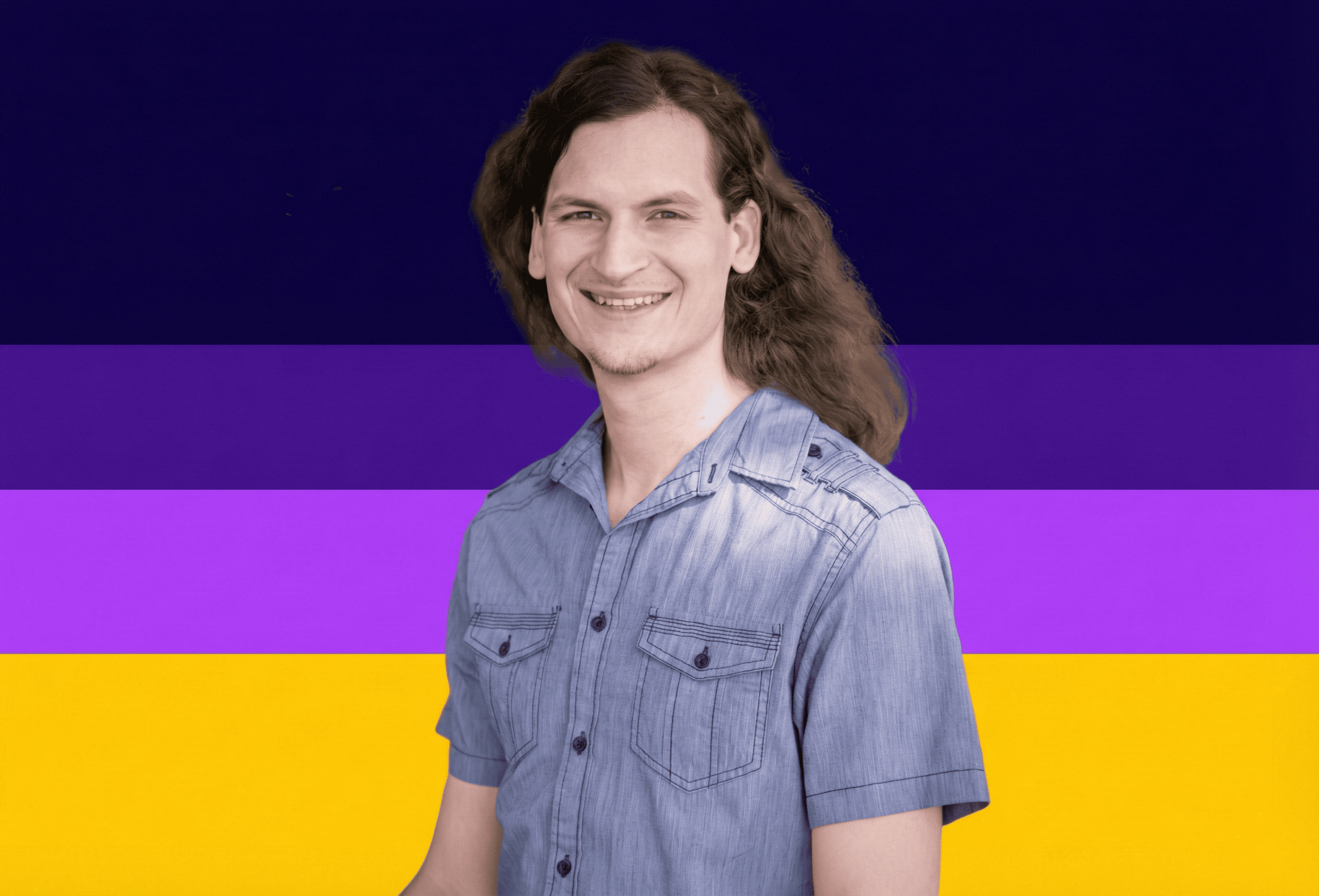
Pol is a strategist and mentor who’s helped countless educators and entrepreneurs scale their businesses with clarity and ease.
From running a data-driven digital agency to co-founding an eLearning platform, he brings both technical expertise and heart-centered leadership.
With Mind of All Trades, Pol brings those lessons to the mic… helping you learn what it really takes to succeed online.
Recent Episodes
:
Testing Episode 3

Jake TDN
September 10, 2025
Lorem Ipsum is simply dummy text of the printing and typesetting industry. Lorem Ipsum has been the industry’s standard dummy text ever since the 1500s, when an unknown printer took a galley of type and scrambled it to make a type specimen book.
It has survived not only five centuries, but also the leap into electronic typesetting, remaining essentially unchanged. It was popularised in the 1960s with the release of Letraset sheets containing Lorem Ipsum passages, and more recently with desktop publishing software like Aldus PageMaker including versions of Lorem Ipsum.
It is a long established fact that a reader will be distracted by the readable content of a page when looking at its layout. The point of using Lorem Ipsum is that it has a more-or-less normal distribution of letters, as opposed to using ‘Content here, content here’, making it look like readable English. Many desktop publishing packages and web page editors now use Lorem Ipsum as their default model text, and a search for ‘lorem ipsum’ will uncover many web sites still in their infancy. Various versions have evolved over the years, sometimes by accident, sometimes on purpose (injected humour and the like).
Listen Now
:
Testing Episode 2
Jake TDN
September 3, 2025
Lorem Ipsum is simply dummy text of the printing and typesetting industry. Lorem Ipsum has been the industry’s standard dummy text ever since the 1500s, when an unknown printer took a galley of type and scrambled it to make a type specimen book.
It has survived not only five centuries, but also the leap into electronic typesetting, remaining essentially unchanged. It was popularised in the 1960s with the release of Letraset sheets containing Lorem Ipsum passages, and more recently with desktop publishing software like Aldus PageMaker including versions of Lorem Ipsum.
It is a long established fact that a reader will be distracted by the readable content of a page when looking at its layout. The point of using Lorem Ipsum is that it has a more-or-less normal distribution of letters, as opposed to using ‘Content here, content here’, making it look like readable English. Many desktop publishing packages and web page editors now use Lorem Ipsum as their default model text, and a search for ‘lorem ipsum’ will uncover many web sites still in their infancy. Various versions have evolved over the years, sometimes by accident, sometimes on purpose (injected humour and the like).
Listen Now
View More
Excited for the new episodes.
Yep, me too
Let’s go